• PUERTO RICO REAL ESTATE GUIDE

    María Villoldo, REALTOR® | License C-16904 | Founder, Luxury Villa Rentals PR

    A trip to Puerto Rico can begin as a vacation and quickly become something more. One morning you are enjoying coffee on a villa terrace; by afternoon, you are wondering what it would be like to own a second home near the beach, relocate your family, purchase an investment property, or finally make Puerto Rico your full-time home.

    If buying or renting property is even a possibility, the best time to contact a real estate agent in Puerto Rico is before you arrive. A short conversation in advance can turn a few unstructured vacation days into a useful, enjoyable property search without taking over the entire trip.

    My name is Maria Villoldo, and I am a Broker Associate with eXp Realty Puerto Rico and the founder of Luxury Villa Rentals PR. Along with Denisse Maeso, Eric J. Ruiz, and our Akarat360 team, I help buyers, sellers, investors, and relocating families understand Puerto Rico real estate from both sides of ownership: the transaction itself and the reality of maintaining, operating, or enjoying a property after closing.

    That connection is intentional. Luxury Villa Rentals PR helps travelers experience the island with the comfort, privacy, and space of a well-selected villa. When a guest’s curiosity grows into a serious property question, Akarat360 provides a separate, professional path to explore Puerto Rico real estate. There is no pressure and no assumption that every guest wants to buy—only a knowledgeable team ready when the question becomes, “Could we live here?”

    Why contact a Puerto Rico real estate agent before your trip?

    Online searches are helpful, but they rarely explain how a neighborhood actually feels, how long a drive takes in real conditions, whether a condominium permits the use you have in mind, or what it may take to insure, finance, furnish, and maintain a particular property.

    Contacting an agent before traveling gives you time to:

    • Clarify whether you are searching for a primary residence, vacation home, rental property, relocation home, or long-term investment.

    • Compare areas based on your lifestyle, commute, schools, beaches, security, walkability, amenities, and budget.

    • Confirm that properties are still available before building your itinerary around them.

    • Prepare financing or proof of funds so you can act if the right property appears.

    • Schedule showings efficiently and leave time to experience the communities you are considering.

    • Identify questions involving homeowners associations, short-term rentals, insurance, backup power, water systems, property taxes, title, and maintenance.

    • Connect with appropriate lenders, attorneys, notaries, inspectors, accountants, contractors, and other local professionals when needed.

    The goal is not to pressure you into buying during your visit. It is to help you leave Puerto Rico with better information than you had when you arrived.

    What should you look for in a real estate agent in Puerto Rico?

    People searching for the best Realtor in Puerto Rico are usually looking for more than access to listings. They want a licensed professional who communicates clearly, understands the relevant market, responds consistently, protects their time, and tells them what they need to know – even when the answer is not the one they expected.

    A strong buyer or relocation agent should offer:

    • Local knowledge: firsthand familiarity with the communities, property types, pricing patterns, and ownership considerations relevant to your search. 

    • Responsiveness: clear answers, organized follow-up, and realistic expectations about what can be accomplished during your trip. 

    • Bilingual service: the ability to communicate comfortably in English and Spanish and help coordinate conversations with local professionals. 

    • Relevant experience: knowledge of the type of purchase you are considering, whether that is a luxury residence, condominium, second home, relocation, investment, or vacation property. 

    • Honest guidance: a willingness to discuss drawbacks, deferred maintenance, access, insurance, association rules, and operating realities rather than simply selling the view. 

    • A reliable network: relationships with qualified professionals who may be needed during financing, due diligence, closing, repairs, furnishing, or property management. 

    • Support after closing: help making the transition from buyer to owner, especially when you live outside Puerto Rico. 

    Before choosing an agent, ask how well that person knows the areas you are considering, what services are included, how communication will work, whether a written representation agreement is required, and how compensation will be handled. These details should be discussed openly before the property search becomes serious.

    Meet Akarat360: boutique attention with broader reach

    Akarat360 is a boutique Puerto Rico real estate team affiliated with eXp Realty Puerto Rico. Boutique does not mean limited. It means our clients receive personal attention, direct communication, and a strategy built around their actual goals while benefiting from the technology, professional network, and reach of a larger brokerage.

    I am a Puerto Rico native, fully bilingual, and have worked in vacation-rental and property operations since 2012. That experience changes the questions I ask when evaluating a property. A beautiful home can still be the wrong purchase if the layout does not work for the buyer, the carrying costs are misunderstood, the association rules conflict with the intended use, or the property requires more hands-on oversight than expected.

    Denisse Maeso works alongside me as part of our client-focused real estate team at eXp Realty Puerto Rico. Eric J. Ruiz, a professional engineer and experienced member of our property-operations team, brings a practical perspective on building systems, solar and battery considerations, and the realities of maintaining a property in Puerto Rico. We also coordinate with other experienced agents and trusted professionals when a client’s search, location, or transaction requires additional specialization.

    Our approach is warm and friendly, but also candid and practical. We want clients to feel comfortable asking questions, including the questions they may think are too basic to ask.

    From a villa stay to a smarter real estate decision

    A villa stay can be more than a place to sleep; it can be a low-pressure way to test-drive a destination. Notice how the drive feels at different times of day. Visit the supermarket, restaurants, beach, medical services, schools, marinas, or golf facilities that matter to you. Pay attention to noise, stairs, parking, backup power, internet service, outdoor upkeep, and how much space your family truly uses.

    Because Luxury Villa Rentals PR and Akarat360 serve different needs within the same broader property journey, we can help you separate the vacation feeling from the ownership decision. Our rental experience gives us practical insight into what owners and guests appreciate—and what can become expensive, inconvenient, or difficult to manage from afar. Real estate representation is handled through eXp Realty Puerto Rico, with the appropriate disclosures and professional responsibilities.

    If you are staying with Luxury Villa Rentals PR, tell us early that you would like to explore real estate. We can reserve a sensible window for a consultation or property tours while protecting the rest of your vacation.

    Where do we help buyers and sellers in Puerto Rico?

    Our strongest firsthand markets include:

    • Palmas del Mar and Humacao: resort living, primary homes, vacation residences, villas, condominiums, investment considerations, and managed ownership. 

    • Guaynabo: established residential communities, gated neighborhoods, luxury homes, family relocation, and access to the San Juan metropolitan area. 

    • San Juan and Condado: urban living, condominiums, second homes, relocation, walkability, luxury properties, and investment considerations. 

    • Río Grande, Luquillo, and Fajardo: coastal homes, resort communities, vacation properties, and access to the rainforest, marinas, and eastern-island activities. 

    We can also coordinate searches and transactions in other parts of Puerto Rico. When another agent has deeper neighborhood-specific expertise, we believe in saying so and collaborating transparently rather than pretending that one person knows every street on the island equally well.

    How does buying property in Puerto Rico work?

    Every transaction is different, but a well-organized purchase generally follows these stages.

    1. Discovery call and property strategy

    We begin with your reason for buying, preferred areas, budget, timing, property type, financing plan, intended use, and non-negotiables. This is where we determine whether your expectations and the current market are aligned.

    2. Financial preparation

    Cash buyers should be ready to provide acceptable proof of funds. Financed buyers should speak with a lender early and obtain a prequalification or preapproval appropriate to the search. Financing timelines and property eligibility can influence which homes make sense.

    3. Area and listing research

    We compare communities and identify suitable properties through the available listing channels, professional relationships, and direct follow-up. Puerto Rico has an MLS, but market information may also appear across brokerage websites, owner-direct advertising, and local agent networks.

    4. Pre-screening and showing plan

    Before you spend vacation time driving across the island, we review the most important property details and organize showings geographically. Whenever possible, we also build in time for you to experience the neighborhood beyond the house itself.

    5. Offer and negotiation

    When you find the right property, we help structure and present the offer, discuss relevant contingencies and timelines, request available disclosures, and negotiate with the seller’s representative. The precise contract and professional roles depend on the transaction.

    6. Due diligence

    This stage may involve inspections, title review, appraisal, financing, insurance, association documents, property-tax information, permits, utility systems, inventory, and intended-use restrictions. Qualified attorneys, notaries, lenders, inspectors, accountants, or other professionals should address matters within their respective fields.

    7. Closing preparation

    Before signing, the parties coordinate final documents, funds, agreed repairs or credits, the final walkthrough, and closing requirements. Buyers should review documents carefully, verify wiring instructions independently, and ask questions about anything that differs from what they expected.

    8. Ownership and after-closing support

    The work may continue after the keys are delivered. Depending on the client’s needs, we can help connect the new owner with utilities, insurance contacts, contractors, furnishings, property oversight, or vacation-rental management resources.

    What should you send your agent before visiting Puerto Rico?

    You do not need a perfect plan. A useful first message can be simple. Include:

    • Your travel dates and how much time you can dedicate to property tours.

    • Whether you want to buy, rent first, sell, relocate, or explore an investment.

    • Your comfortable budget range and whether you expect to pay cash or finance.

    • The areas already on your list and what attracted you to them.

    • Your preferred property type, bedroom count, lifestyle needs, and major deal-breakers.

    • Whether the property may be used as a primary home, second home, long-term rental, or short-term rental.

    • Any timing considerations involving employment, school, tax planning, a home sale, or a lease.

    The more honestly we understand your priorities, the more useful your time in Puerto Rico will be.

    Frequently asked questions about choosing a Puerto Rico Realtor

    How do I find a good real estate agent in Puerto Rico?

    Verify that the agent is properly licensed, ask about experience in your target market and property type, discuss communication and services, and look for someone who is willing to explain both advantages and potential problems. Puerto Rico’s Department of State provides information regarding the licensing board for real estate brokers, salespersons, and companies.

    Should I contact a real estate agent before booking my Puerto Rico trip?

    Yes, especially if viewing property is an important purpose of the trip. Early contact allows time to refine the search, prepare financing or proof of funds, confirm availability, and schedule showings efficiently.

    Can a Puerto Rico real estate agent help me relocate from the mainland United States?

    Yes. A relocation-focused agent can help compare communities, explain local ownership considerations, coordinate virtual and in-person showings, and introduce the professionals you may need. Tax, legal, residency, and Act 60 advice should come from qualified attorneys and tax professionals.

    Can you help me buy an investment property or short-term rental in Puerto Rico?

    Yes, but the analysis should go beyond projected nightly rates. The property, municipality, condominium documents, homeowners association, insurance, permits, utilities, operating costs, and intended use all require careful review. No agent should guarantee revenue or assume that every attractive property can legally or practically operate as a short-term rental.

    Should I rent in Puerto Rico before buying?

    Sometimes. Renting can help when you are unfamiliar with the island, comparing distant areas, or uncertain about daily life in a particular community. Other buyers arrive with a clearly defined location and are ready to purchase. The right answer depends on your timeline and confidence, not a universal rule.

    How long does it take to buy a home in Puerto Rico?

    The timeline depends on financing, title, appraisal, inspections, negotiations, permits, succession issues, and the readiness of the parties. A cash purchase may move faster, but cash does not eliminate due diligence or title work.

    Do I need a bilingual real estate agent in Puerto Rico?

    It is not mandatory, but it can make the process considerably easier. Documents and professional conversations may occur in English, Spanish, or both. A bilingual agent can reduce confusion and help keep communication moving.

    Planning a trip? Let us help you build a smarter property search

    You do not need to be ready to make an offer before contacting us. You may still be comparing San Juan with Palmas del Mar, deciding whether to rent or buy, or wondering whether Puerto Rico fits the next chapter of your life.

    Reach out before your trip. Tell us what you are considering, what you hope to see, and what questions you need answered. We will help you create a realistic plan and, if the right property is available, make sure you are prepared to recognize it.

    Maria E. Villoldo

    Broker Associate | eXp Realty Puerto Rico | eXp Luxury

    Akarat360 | Puerto Rico Real Estate, Relocation, Buying, Selling, and Investment

    Puerto Rico Real Estate License C-16904

    Mobile: (787) 507-1966

    Email: maria@luxuryrentalspr.com

    Working alongside Denisse Maeso, Eric J. Ruiz, and the Akarat360 team
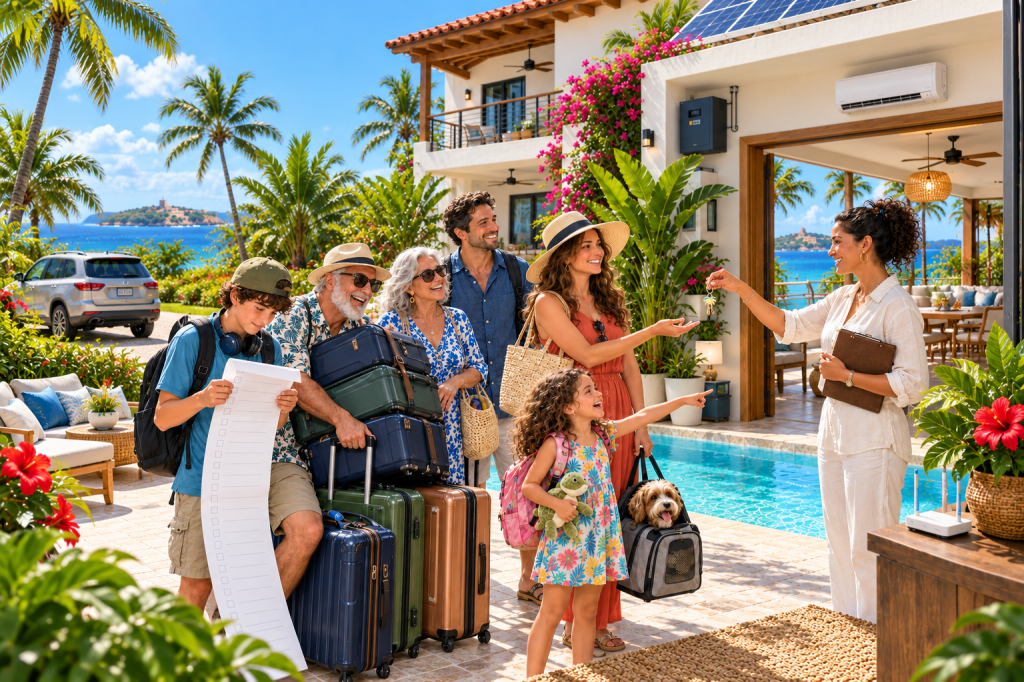
  • A Puerto Rico vacation villa can offer privacy, space, a kitchen, laundry, outdoor living, and a private pool. It can also vary far more than a hotel room. Two villas in the same community may have completely different access, backup systems, layouts, rules, and management standards.

    Ask the right questions before paying, not after arrival.

    1. Confirm who manages the property

    Book through a verifiable company or an established platform, and keep communication and payments within the approved process. Confirm the manager’s local contact information, check-in procedure, and support hours.

    Professional management does not mean nothing will ever go wrong. It means there is a clear system for responding when something does.

    2. Understand the exact location

    Puerto Rico addresses and map pins can be imprecise. Ask for the community, neighborhood, approximate distance to the beach, and whether a car or golf cart is needed. “Beachfront community” does not necessarily mean the villa is beachfront.

    3. Verify occupancy and visitors

    Confirm the maximum number of overnight guests, whether children count, and whether daytime visitors are permitted. Ask about parking limits and gate registration. Never assume a large living room means events are allowed.

    4. Study the layout

    Request bedroom locations, bed sizes, bathroom access, stair information, and details about balconies and pool areas. For older adults or travelers with disabilities, ask specific questions about entrances, showers, thresholds, and ground-floor accommodations.

    “Five bedrooms” does not tell you whether three are reached by narrow stairs or whether one has exterior access only.

    5. Confirm what beach and resort access means

    A property can be inside a resort community without including every club. Beach clubs, golf, tennis, gyms, and other facilities may require membership, guest registration, reservations, or separate fees.

    Ask for a written list of what is included with your reservation.

    6. Ask about power, water, and internet

    Puerto Rico can experience utility interruptions. Ask whether the villa has a generator, battery system, water cistern, or another backup; what the backup actually powers; and whether operation is automatic.

    A generator that supports a refrigerator and a few outlets is not the same as full-house backup with air conditioning.

    7. Review all charges

    Compare the full amount: nightly rent, taxes, cleaning, service fees, security deposit or damage waiver, resort charges, parking, pet fees, pool heating, and optional housekeeping.

    Ask when deposits are released and what documentation is used if damage is claimed.

    8. Read cancellation and weather policies

    Understand payment deadlines, cancellation terms, travel-insurance recommendations, and the policy for hurricanes or other major disruptions. A rainy forecast is normally not the same as an official travel interruption.

    9. Clarify housekeeping

    Most villas are cleaned before arrival and after departure, not automatically every day. Confirm whether mid-stay housekeeping is included, optional, or required for longer stays. Ask what starter supplies are provided so you know what to purchase.

    10. Plan transportation

    Outside metropolitan San Juan, rental cars or arranged transportation are usually the most dependable choices. Confirm parking capacity at the villa. If a golf cart is advertised, ask whether it is included, registered, insured, and authorized for guest use.

    11. Review rules with every guest

    Quiet hours, smoking, pets, pool safety, visitor limits, and community rules apply to the entire group. The person who made the reservation remains responsible even when another guest causes the problem.

    12. Keep expectations realistic

    A villa is a private home, not a hotel with identical rooms and a front desk downstairs. The reward is more privacy, individuality, and living space. The best experience comes from choosing the right home and working with a responsive local manager.

    Luxury Villa Rentals has more than a decade of experience managing Puerto Rico vacation homes. We provide clear property information, local support, and guidance so guests can book with confidence.

  • Some of the best meals near Palmas del Mar are not behind the resort gates. They are in Humacao’s neighborhoods, along the waterfront in Naguabo, in the countryside around Las Piedras, and at destination restaurants in Juncos.

    A strict 20-minute radius would leave several excellent places off the list. This guide uses near Palmas del Mar more realistically: the closest choices may be 5 to 15 minutes away, central Humacao and Las Piedras are often about 15 to 30 minutes away, and Naguabo or Juncos can take roughly 30 to 45 minutes. Times are estimates from the Palmas entrance and vary with your villa, traffic, weather, and route.

    These 15 choices are organized by area rather than ranked. The right restaurant depends on whether you want brunch, a relaxed family meal, seafood by the water, or a dinner worth planning an evening around.

    Inside Palmas del Mar: 5 to 15 minutes

    1. TROVA — for a polished dinner or special occasion

    TROVA at Wyndham Palmas is the close-to-home choice when the evening calls for elevated island flavors, fresh seafood, thoughtful presentation, and wine. It works well for couples, celebrations, and the final dinner of a trip. Reservations are the sensible move on weekends and holidays.

    2. Pura Vida — for a relaxed Caribbean family meal

    Pura Vida is a casual option for Puerto Rican and Caribbean flavors, creative cocktails, and a meal that can please a mixed-age group. Choose it when everyone wants a full dinner without making the night overly formal.

    Humacao and Punta Santiago: about 10 to 25 minutes

    3. Brasas D’ Palmas — for approachable Puerto Rican and Caribbean cooking

    Near the Palmas entrance, Brasas D’ Palmas is useful for families and groups who want familiar island flavors, seafood, meats, and cocktails in a casual sit-down setting. It is close enough for an easy dinner but still feels like a change of scenery from the villa.

    4. Bocata by Campillo — for a Spanish-inspired lunch

    Bocata by Campillo in Humacao is a strong daytime stop for sandwiches, tapas-style bites, and Spanish deli flavors. It is especially convenient on a grocery or errand day in town, when a long waterfront lunch is not part of the plan.

    5. Guayaba Tostada Pastry & Coffee House — for brunch, coffee, and something sweet

    Guayaba Tostada is the answer when the group wants a slower morning. Expect a café-and-brunch atmosphere with coffee, pastries, and substantial breakfast choices. It is a good change from cooking at the villa and an easy choice before exploring Humacao.

    6. Patria Bar & Restaurant — for Puerto Rican cooking near the coast

    Patria in Punta Santiago focuses on Puerto Rican cuisine in a laid-back setting near the coast. Pair it with a visit to the Humacao Nature Reserve or a drive through Punta Santiago for a half-day that feels much more local than a resort-only itinerary.

    Las Piedras: about 20 to 30 minutes

    7. Guacamole al Fresco — for Mexican flavors and a casual night out

    When the table wants tacos, burritos, guacamole, and margaritas, Guacamole al Fresco offers a lively alternative to seafood and comida criolla. It is relaxed enough for families and fun for a low-key group dinner.

    8. Hacienda La Tormenta — for traditional food in a country setting

    Hacienda La Tormenta leans into Puerto Rican comfort food, with specialties associated with a lechonera and dishes such as mofongo, pork, and grilled meats. The country atmosphere makes the meal feel like an outing rather than simply another reservation.

    9. Refranes Café Bar & Lounge — for an all-day local stop

    Refranes moves from café energy earlier in the day to a bar-and-lounge atmosphere later on. Puerto Rican plates, breakfast and lunch options, cocktails, and occasional entertainment make it flexible for groups who want something casual and local. Check its social channels for the current schedule and any live music or karaoke.

    Naguabo’s waterfront: about 30 to 40 minutes

    The Malecón de Naguabo is a dining destination in its own right, with dozens of restaurants and kiosks facing the water. Seafood is the obvious draw. This is also the place to look for pastelillos de chapín, crisp turnovers filled with trunkfish that are closely associated with Naguabo.

    10. El Makito — for a classic family seafood lunch

    El Makito is a long-running waterfront choice for seafood and Puerto Rican cooking. Go when the group wants fish, shellfish, mofongo, cold drinks, and a view rather than a rushed meal. Weekends can be busy, so allow time for parking and a relaxed pace.

    11. Ikako’s Bar & Restaurant — for seafood, mofongo, and mojitos

    Ikako’s combines seafood and comida criolla with a family-friendly waterfront atmosphere. It is a good fit for a mixed group because diners can choose among fish, shellfish, meats, mofongo, and cocktails while still getting the Malecón experience.

    12. TerraVento Seaside Bar & Grill — for a broader waterfront menu

    TerraVento is helpful when not everyone wants seafood. Its mix of seafood, steaks, pasta, and Puerto Rican dishes gives larger groups more range without sacrificing the seaside setting. It is an easy place to settle in for a leisurely late lunch or dinner.

    Juncos: about 30 to 45 minutes

    Juncos is beyond a literal 20-minute radius, but it earns a place in this guide because it offers some of eastern Puerto Rico’s most distinctive dining experiences.

    13. BACOA Finca + Fogón — for destination-worthy farm dining

    BACOA is the meal to plan ahead. Set on a farm, it celebrates Puerto Rican culinary traditions through seasonal ingredients and wood-fire cooking. The setting, cooking style, and emphasis on sobremesa make it ideal for food-focused travelers, couples, and milestone dinners. Reserve in advance and treat the drive as part of the evening.

    14. Restaurante Casajú — for generous Puerto Rican food in the countryside

    Casajú offers classic Puerto Rican cooking in an open-air country setting. It suits families and hungry groups looking for substantial portions, mofongo, pork, whole fish, and familiar criollo sides. Lunch is usually the most natural time to visit, but confirm the current days and service hours before leaving Palmas.

    15. Arte Mío Café — for a brunch road trip

    Arte Mío Café serves Puerto Rican coffee and brunch in Juncos from morning into the afternoon. It is a smart choice for travelers who prefer a daytime food outing, or as a stop before continuing toward the central-eastern towns.

    Which restaurant should you choose?

    For date night or a celebration: TROVA or BACOA.

    For waterfront seafood: El Makito, Ikako’s, or TerraVento.

    For a local Puerto Rican meal: Patria, Hacienda La Tormenta, Refranes, or Casajú.

    For brunch and coffee: Guayaba Tostada or Arte Mío Café.

    For families and mixed appetites: Pura Vida, Brasas D’ Palmas, Casajú, or TerraVento.

    For a break from Puerto Rican and seafood menus: Guacamole al Fresco or Bocata by Campillo.

    Before you drive

    Restaurant schedules in eastern Puerto Rico can change by season, holiday, weather, and private event. Confirm the current hours on the restaurant’s official website or social profile the same day. Call ahead for large parties, ask about reservations, and do not rely on an old directory listing alone.

    If dinner includes cocktails, designate a driver or arrange transportation before leaving the villa. Roads outside the main highways can be dark, narrow, or unfamiliar after rain.

    Make the villa your dining base

    One advantage of a Palmas del Mar villa is the ability to mix restaurant outings with easy breakfasts, poolside lunches, and a private-chef dinner at home. Pick two or three destinations from this guide, then leave room for a quiet night at the villa.

    Luxury Villa Rentals can help guests match restaurants to their itinerary, group size, and villa location. Ask for current local suggestions before your stay, especially for holidays, large parties, and special occasions.

  • Vieques, Culebra, and Icacos are often grouped together in Puerto Rico vacation planning, but they are very different experiences. Vieques and Culebra are inhabited island municipalities with beaches, restaurants, accommodations, and local transportation. Icacos is an uninhabited cay reached by boat from Fajardo.

    From Palmas del Mar, all three are possible. The best choice depends on how much time you have and how much logistics your group wants to manage.

    Choose Icacos for the easiest beach-and-boat day

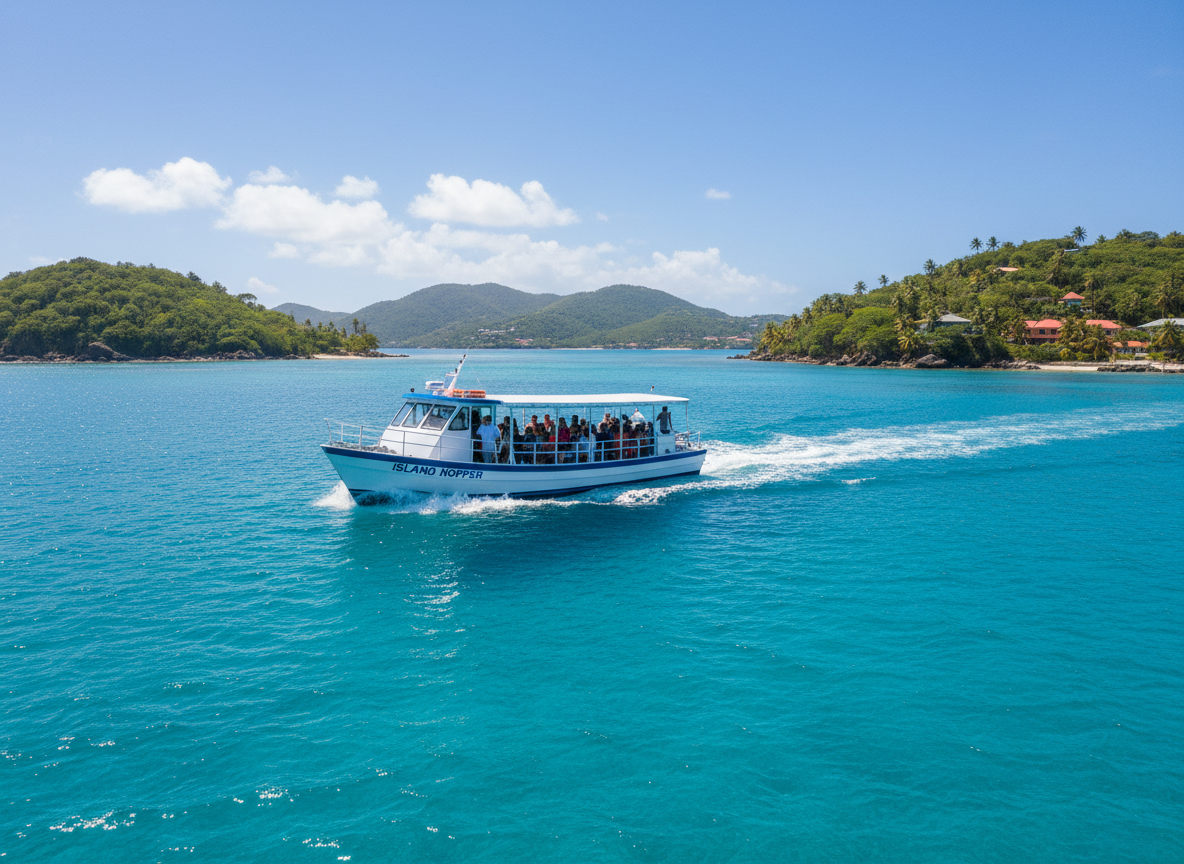
    A small passenger ferry traveling across the turquoise Caribbean Sea near Puerto Rico

    Icacos is the simplest option for most families and groups staying in Palmas. Drive to a Fajardo marina and board a catamaran, private charter, or water taxi. The direct boat ride can take approximately 15 to 20 minutes by water taxi, while organized excursions spend more time sailing and may include snorkeling, equipment, food, or drinks.

    Icacos has beautiful water and pale sand but no developed facilities and little reliable shade. A staffed catamaran is convenient for travelers who want equipment and support. A water taxi offers independence, but your group must bring what it needs and arrange the return carefully.

    Best for: a manageable day trip, first-time boaters, families, groups, snorkeling, and travelers who want to return to their villa for dinner.

    Choose Culebra for iconic beaches

    Culebra is known for clear water, a slow pace, and beaches such as Flamenco. The official passenger ferry from Ceiba takes approximately 90 minutes. Travelers must arrive at the terminal one hour before departure, and boarding closes before the scheduled departure time.

    When driving from Palmas, add the trip to Ceiba, parking, check-in, ferry time, local transportation, and the return schedule. A Culebra day trip is possible, but it is a long day with multiple points where delays can reduce beach time.

    A short flight from Ceiba can save time and may be worth the additional cost, especially for a small group. Confirm baggage limitations before booking.

    Best for: travelers focused on beaches who are willing to plan carefully or stay overnight.

    Choose Vieques for beaches and the bioluminescent bay

    Vieques offers wild horses, varied beaches, and Mosquito Bay, one of Puerto Rico’s famous bioluminescent bays. The official ferry from Ceiba takes approximately one hour. Flights from Ceiba are another option.

    Vieques is usually better as an overnight trip. The bioluminescent bay is experienced after dark, and trying to combine it with same-day ferry transportation can be impractical. Local vehicles and tours should be reserved before arrival, particularly during holidays.

    Best for: couples, nature lovers, repeat visitors, and travelers who can devote at least one night.

    Ferry planning essentials

    • Buy tickets as early as the current booking window allows.
    • Use the official Puerto Rico Ferry website or app for schedules and service alerts.
    • Arrive at least one hour before departure.
    • Confirm parking and ground transportation separately.
    • Build flexibility into the day; marine conditions can affect service.
    • Match every passenger name to the required identification.
    • Do not schedule a ferry return too close to an airline departure.

    Which one should you choose?

    Choose Icacos when you want the easiest excursion from Palmas and prefer to sleep in your villa that night.

    Choose Culebra when an iconic beach is the priority and you are comfortable with an early, highly structured travel day.

    Choose Vieques when you can stay overnight and want a fuller island experience that may include the bioluminescent bay.

    For large groups, a private charter can sometimes be more practical than coordinating many ferry tickets, vehicles, and transfers. Luxury Villa Rentals can help guests think through the timing and select an eastern Puerto Rico home base that supports the rest of the trip.

  • Screenshot

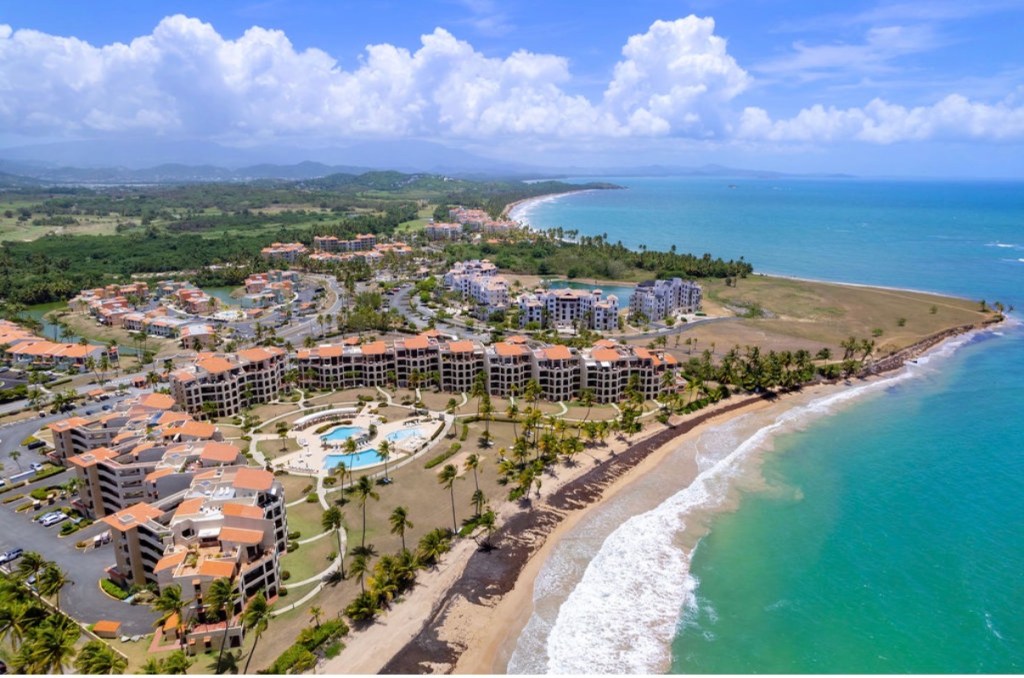
    Palmas del Mar is not simply a place to sleep between Puerto Rico excursions. It is a destination of its own: a gated beachfront community in Humacao with residential neighborhoods, beaches, restaurants, sports facilities, a marina, and vacation villas ranging from comfortable condos to large private homes.

    For travelers who want both relaxation and exploration, Palmas can be one of the island’s most practical home bases.

    Where is Palmas del Mar?

    Palmas del Mar is on Puerto Rico’s east coast, approximately 45 to 60 minutes from Luis Munoz Marin International Airport under normal conditions. Traffic near San Juan can extend the drive, so allow extra time when traveling during weekday rush hours.

    The community is close enough for a San Juan day trip but better positioned for Fajardo, Ceiba, Naguabo, Luquillo, El Yunque, and other eastern attractions.

    What is inside Palmas del Mar?

    The community covers approximately 2,750 acres and includes two 18-hole golf courses, a large tennis center, an equestrian center, a marina, beaches, and more than a dozen dining options. Palmanova Plaza serves as one of the central gathering points for restaurants, coffee, and everyday conveniences.

    Because Palmas is large, the experience changes by neighborhood. Some villas are directly on the beach, some overlook golf courses, and others offer private pools and generous indoor-outdoor living. Before booking, decide whether your priority is oceanfront access, a private pool, walkability, a quiet residential setting, or space for a large group.

    Beaches and pools

    Palmas offers a long stretch of coastline, but beach conditions can vary by season and weather. Guests should follow posted warnings and supervise children near the water.

    Many villas and residential communities have pools. Some larger homes include private pools, which can be especially valuable for families and groups. The Palmas Beach Club has pools, water slides, a children’s water-play area, and dining, but it is a member-exclusive facility. Rental access is not automatic, so confirm in writing whether access is included with your specific reservation.

    Golf, tennis, and equestrian activities

    Golfers can explore the Palm and Flamboyan courses. Tennis players have access to one of the Caribbean’s largest tennis facilities, subject to reservations and applicable fees. The equestrian center may offer lessons, trail experiences, or scheduled activities depending on current operations.

    Book sports activities early during holidays and high-demand periods. Your villa manager can also help you understand which facilities require advance reservations or guest registration.

    Getting around Palmas

    A car is useful for arriving, buying groceries, and taking day trips. Golf carts are also popular inside the community, but availability, parking rules, charging, and authorized use depend on the property and rental provider. Never assume a golf cart is included unless it appears in your reservation agreement.

    When comparing villas, ask how far the property is from the beach, restaurants, and Palmanova Plaza. A map can make two homes look close even when the practical route is longer.

    Where to eat

    Dining choices range from casual pizza and Tex-Mex to seafood, Asian cuisine, coffee shops, beachside lunches, and refined dinners. Popular names listed by the community include Beach Bohio, Blue Hawaii, C.Bar, Chihuahua Tex Mex Cantina, La Brochette, La Pescaderia, Chez Daniel, The Flying Pizza, Cortadito 787, and Palmas Market & Deli.

    Hours change seasonally. Call ahead, make reservations for weekend dinners, and confirm whether a restaurant is located inside a members-only facility.

    Best nearby day trips

    From Palmas, consider:

    • Humacao Nature Reserve for kayaking, cycling, birding, and easy outdoor time.
    • Naguabo for waterfront dining and a relaxed local atmosphere.
    • Fajardo for catamarans, snorkeling, marinas, and bioluminescent-bay tours.
    • Ceiba for passenger ferries or short flights to Vieques and Culebra.
    • El Yunque for rainforest scenery, trails, rivers, and the El Portal visitor center.
    • Luquillo for a beach day and its famous roadside kiosks.
    • Old San Juan for history, architecture, shopping, and dining.

    What to pack

    Bring reef-conscious sun protection, insect repellent, comfortable walking shoes, rain gear, refillable water bottles, and at least one light layer for air-conditioned restaurants. Families may want water shoes and a compact beach bag. If you plan to play golf or tennis, confirm dress codes and equipment-rental availability before packing extra gear.

    When to book

    Christmas, New Year’s, Presidents’ Day week, spring break, Easter, summer holidays, and long weekends can fill quickly. Large homes and oceanfront villas have the least flexibility because there are fewer of them. For major holidays or groups needing five or more bedrooms, booking six to twelve months ahead is sensible.

    Make Palmas feel effortless

    The right villa is not simply the one with the most attractive photos. It should fit your sleeping arrangements, mobility needs, preferred activities, transportation plan, and desired level of privacy.

    Luxury Villa Rentals has managed Puerto Rico vacation homes for more than a decade. We can help you compare neighborhoods, understand the actual layout of a property, and plan a stay that works for your entire group. Visit http://www.LuxuryRentalsPR.com

  • Choosing where to stay in Puerto Rico can shape your entire vacation. San Juan gives you history, restaurants, and nightlife at your doorstep. Rio Grande places you close to El Yunque and some of the island’s best-known resorts. Palmas del Mar offers a different balance: a gated beachfront community where families and groups can spread out in a villa while remaining within reach of the rainforest, Fajardo, Vieques, Culebra, and San Juan.

    There is no single best choice for every traveler. The right answer depends on how you want your days to feel.

    Choose San Juan for culture, dining, and nightlife

    San Juan is the strongest choice for a first-time visitor who wants an urban vacation. Old San Juan offers colorful streets, historic forts, plazas, shops, and restaurants. Condado and Isla Verde add beaches, hotels, nightlife, and easy access to taxis and rideshare services.

    The tradeoff is space. Hotel rooms and city apartments are often smaller than villas, parking can be inconvenient, and the pace is busier. San Juan also places you farther from many of the east-coast experiences, including the Ceiba ferry terminal and Fajardo’s marinas.

    San Juan is best for: couples, short stays, food-focused trips, nightlife, history lovers, and travelers who do not want to rent a car.

    Choose Rio Grande for rainforest access and resort seclusion

    Rio Grande is known for El Yunque, tropical scenery, golf, and luxury resorts. It is a beautiful option for travelers who want a peaceful resort environment and expect to spend significant time in the rainforest or along the northeast coast.

    However, Rio Grande is spread out. Restaurants and activities may require driving, and travelers who want a private home with multiple bedrooms may find fewer choices than in a villa-centered community. A rental car or arranged transportation is strongly recommended.

    Rio Grande is best for: couples, golfers, spa travelers, nature lovers, and visitors who want to stay very close to El Yunque.

    Choose Palmas del Mar for villas, families, and an easy east-coast home base

    Palmas del Mar is a 2,750-acre gated resort community in Humacao with beaches, golf, tennis, an equestrian center, a marina, restaurants, and residential neighborhoods. Its greatest advantage is the combination of resort-style surroundings and private-villa living.

    Instead of meeting in a hotel lobby, your group can have breakfast together, relax beside a private pool, do laundry, prepare snacks for an excursion, and enjoy evenings in the same living space. Palmas is particularly appealing for families, reunions, wedding groups, golf trips, and multi-generational vacations.

    It also works well as an eastern Puerto Rico base. Fajardo’s marinas, the Ceiba ferry terminal, El Yunque, Luquillo, Naguabo, and the Humacao Nature Reserve are all realistic day trips. San Juan is still accessible for a full day of sightseeing.

    The main consideration is transportation. Rideshare availability is less consistent outside metropolitan San Juan, so most guests should rent a car or arrange private transfers.

    Palmas del Mar is best for: families, groups, villa travelers, golfers, beach vacations, reunions, and guests who want relaxation without being confined to a hotel.

    Quick decision guide

    • Stay in San Juan if restaurants, culture, and nightlife are your highest priorities.
    • Stay in Rio Grande if El Yunque and a traditional luxury-resort experience are the focus.
    • Stay in Palmas del Mar if you want space, privacy, resort amenities, and convenient access to eastern Puerto Rico.

    Our recommendation

    For a trip of five nights or longer, especially with four or more travelers, Palmas del Mar often provides the best balance. You can enjoy slow mornings and private evenings without giving up the option to explore.

    Luxury Villa Rentals represents a carefully selected collection of homes and villas in Palmas del Mar. Tell us who is traveling, what matters most to your group, and which experiences you want to include. We will help you choose a home base that makes the entire vacation easier.

  • Puerto Rican Spanish has a personality of its own. It is fast, expressive, creative, and filled with words that may leave even fluent Spanish speakers wondering what they just heard.

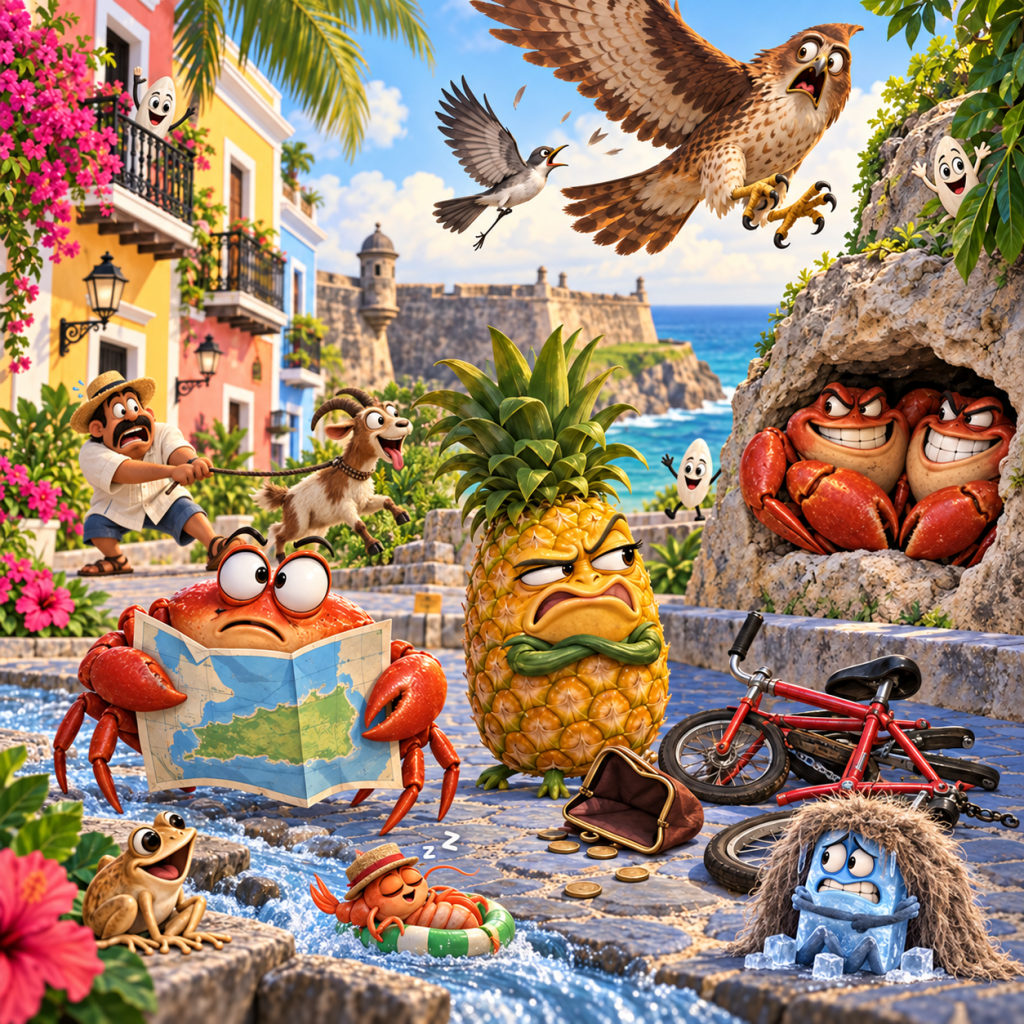
    Boricuas can describe complete confusion with a cross-eyed crab, declare that a plan has failed because a bicycle broke, or warn you about someone’s intentions by saying that an egg needs salt.

    The expressions make perfect sense in Puerto Rico. Translate them literally into English, however, and they become absolutely hilarious.

    Here are 25 popular Puerto Rican sayings and slang expressions, their literal English translations, and what Puerto Ricans actually mean.

    1. Ay, bendito

    Literal translation: “Oh, blessed one.”

    What it really means: Almost anything, depending on the tone. It can express sympathy, surprise, frustration, tenderness, disbelief, or mild annoyance.

    “Ay, bendito, the airline lost your luggage” sounds compassionate. A dramatically extended “Ay, bendito…” may mean you should have known better.

    2. Wepa

    Literal translation: There really isn’t one.

    What it really means: “Yes!” “All right!” “Let’s go!” or simply an enthusiastic expression of happiness.

    You may hear “Wepa!” at a party, sporting event, wedding, festival, or anytime a Puerto Rican believes a moment deserves additional excitement.

    3. Está brutal

    Literal translation: “It is brutal.”

    What it really means: It is amazing, impressive, intense, or exceptionally good.

    If a Puerto Rican tells you your villa is “brutal,” there is no reason to contact the property manager. You just received a major compliment.

    4. A fuego

    Literal translation: “On fire.”

    What it really means: Excellent, exciting, intense, or operating at full energy.

    The beach can be “a fuego,” the party can be “a fuego,” and the food can be “a fuego.” Nothing is necessarily burning.

    5. Estar al garete

    Literal translation: “To be adrift.”

    What it really means: To be without direction, disorganized, out of control, or handled carelessly.

    If the vacation itinerary is “al garete,” nobody knows where the group is going, who made the reservation, or why everyone is waiting in the wrong lobby.

    6. Se formó un revolú

    Literal translation: “A commotion formed itself.”

    What it really means: A mess, argument, complicated situation, or general chaos suddenly erupted.

    One missing set of villa keys, three cars, and twelve relatives arriving at different times can produce a respectable revolú.

    7. Pichea eso

    Literal translation: “Pitch that.”

    What it really means: Ignore it, forget about it, let it go, or stop paying attention to it.

    Your friend wants to continue arguing about where to have dinner. You are already hungry. “Pichea eso” ends the discussion.

    8. Vamos a janguear

    Literal translation: “Let’s hanguear.”

    What it really means: Let’s hang out.

    Janguear is a perfect example of Puerto Rican Spanglish: an English expression transformed into a Spanish verb. It can mean going out with friends, relaxing somewhere, or spending time together without a rigid plan.

    9. Hay que bregar

    Literal translation: “We have to struggle.”

    What it really means: We need to handle it, work through it, solve it, manage it, or deal with the situation.

    Bregar may be the most useful verb in Puerto Rico. Puerto Ricans bregan with work, traffic, family, repairs, bureaucracy, and practically everything else life presents.

    10. Bregaste cajita de pollo

    Literal translation: “You handled it like a little box of chicken.”

    What it really means: You treated someone badly, betrayed them, played dirty, or failed to handle the situation properly.

    This older Puerto Rican expression sounds like a compliment involving fried chicken. It definitely is not.

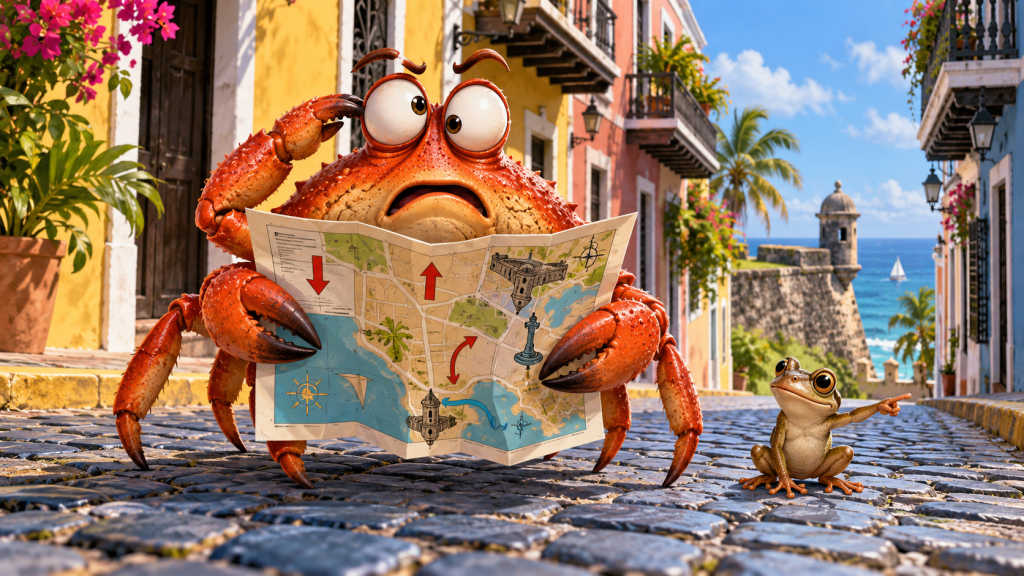
    11. Más perdido que un juey bizco

    Literal translation: “More lost than a cross-eyed land crab.”

    What it really means: Completely lost, confused, or unable to understand what is happening.

    A juey already moves sideways. Apparently, making the poor crab cross-eyed guarantees total confusion.

    12. Lo cogieron de mangó bajito

    Literal translation: “They took him for a low-hanging mango.”

    What it really means: Someone was treated as an easy target or taken advantage of because they were accessible, trusting, or unlikely to fight back.

    It is Puerto Rico’s fruit-based version of saying someone was easy pickings.

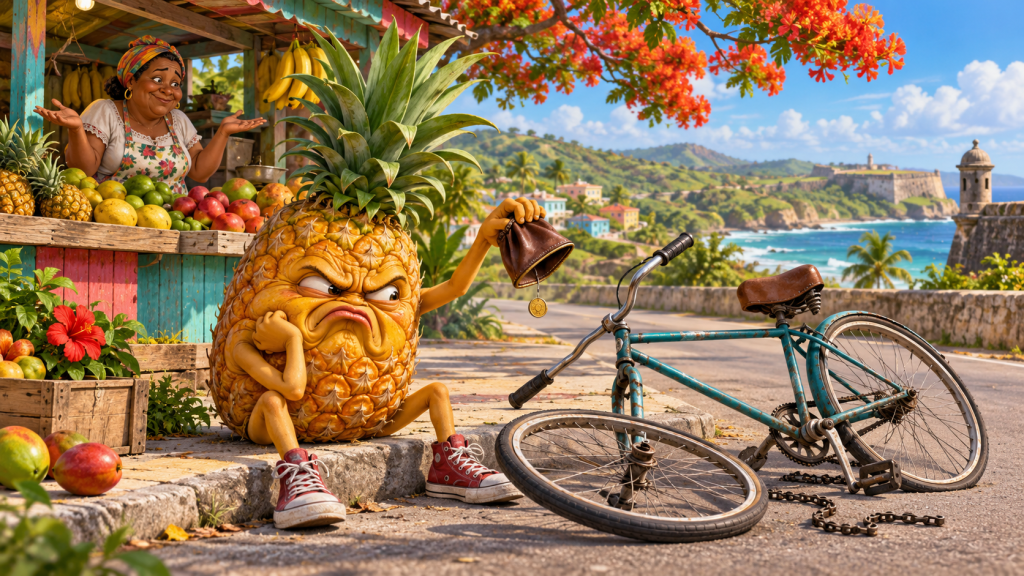
    13. La piña está agria

    Literal translation: “The pineapple is sour.”

    What it really means: The situation is difficult, money is tight, or things are not going particularly well.

    If someone says “la piña está agria,” do not offer them a sweeter pineapple. The problem is probably much bigger than the fruit.

    14. Cuando Colón baje el dedo

    Literal translation: “When Columbus lowers his finger.”

    What it really means: Never.

    This Puerto Rican version of “when pigs fly” refers to a permanently posed statue. In other words, if someone promises to do something “cuando Colón baje el dedo,” do not wait for it.

    15. Cada guaraguao tiene su pitirre

    Literal translation: “Every hawk has its kingbird.”

    What it really means: Even the biggest or most powerful opponent will eventually meet someone willing to challenge them.

    The pitirre is much smaller than the guaraguao, but it is famously fearless when defending its territory. Never underestimate the little bird—or the underdog.

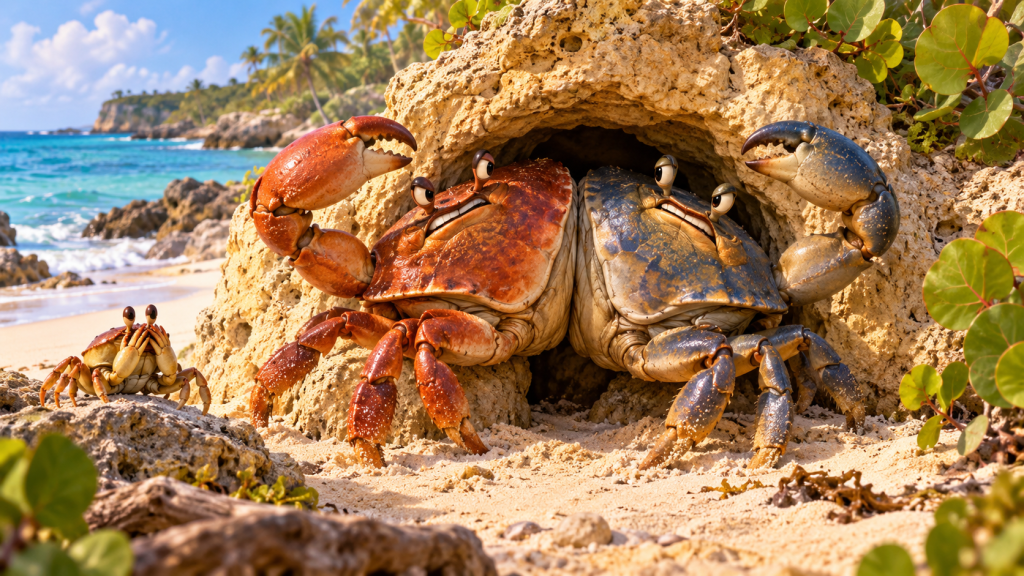
    16. Dos jueyes machos no caben en la misma cueva

    Literal translation: “Two male land crabs cannot fit inside the same cave.”

    What it really means: Two dominant, stubborn, or strong personalities will have trouble sharing the same space or authority.

    The problem is not really the size of the cave. It is the size of the egos.

    17. Hablar a calzón quitao

    Literal translation: “To speak with your underwear off.”

    What it really means: To speak openly, honestly, directly, and without trying to soften the truth.

    When someone wants to talk “a calzón quitao,” expect honesty. Fortunately, everyone’s clothing normally remains in place.

    18. Me estoy comiendo un cable

    Literal translation: “I am eating a cable.”

    What it really means: I am going through a difficult time, I am broke, or I am desperately bored. The precise meaning depends on the context.

    It has nothing to do with hunger or electricity, although the literal translation sounds extremely unsafe.

    19. Se chavó la bicicleta

    Literal translation: “The bicycle got screwed up.”

    What it really means: The plan failed, the opportunity is gone, or the situation has become impossible to fix.

    Nobody needs to own a bicycle for the bicycle to become officially chavada.

    20. Ese huevo quiere sal

    Literal translation: “That egg wants salt.”

    What it really means: Something suspicious is developing, someone has hidden intentions, or two people may be showing romantic interest while pretending otherwise.

    The egg is fine. It is the people you should be watching.

    21. A mí plín y a la madama dulce de coco

    Literal translation: “Plín for me and coconut candy for the lady.”

    What it really means: I do not care at all.

    The sentence sounds like a confusing dessert order, but it is actually a colorful declaration of complete indifference.

    22. No hay cama pa’ tanta gente

    Literal translation: “There are not enough beds for so many people.”

    What it really means: Too many people, opinions, complications, or activities are competing for the same limited space.

    The expression became widely recognized through Puerto Rican popular culture and works perfectly whenever a gathering becomes bigger than anyone planned.

    23. Me dejaron como novia de pueblo: vestida y alborotada

    Literal translation: “They left me like a small-town bride: dressed and excited.”

    What it really means: Someone was ready and waiting, but the other person never arrived or the anticipated event never happened.

    Imagine having the outfit, the hair, the makeup, and the excitement—but no wedding. That is the level of disappointment involved.

    24. Tengo una jartera

    Literal translation: “I have a stuffing.”

    What it really means: I ate far too much and am completely full.

    After a plate of lechón, arroz con gandules, pasteles, morcilla, and tembleque, “tengo una jartera” may be the most authentic Puerto Rican expression you use all day.

    25. Vamos a meter mano

    Literal translation: “Let’s put a hand in.”

    What it really means: Let’s get started, take action, work on it, or tackle the situation.

    If someone says “vamos a meter mano,” it is time to stop discussing the plan and begin doing the work.

    How to Understand Puerto Rican Spanish

    Puerto Rican Spanish reflects the island’s history and cultural influences. It includes Spanish expressions, Indigenous Taíno vocabulary, African linguistic influences, Caribbean speech patterns, and words adapted from English.

    Puerto Ricans also tend to shorten words during casual conversation. Para becomes pa’, todo may sound like to’, and perdido often becomes perdío. Final consonants may soften or disappear, making conversations sound even faster to visitors.

    The best way to understand Boricua slang is to listen to the context, facial expression, and tone. “Ay, bendito” can communicate more emotion than an entire paragraph, while “está brutal” means something completely different from its literal English translation.

    Do not worry if you cannot understand everything immediately. Ask what an expression means, laugh at the literal translation, and enjoy learning how Puerto Ricans turn everyday conversation into an art form.

    Speak Like a Local During Your Puerto Rico Vacation

    Learning a few Puerto Rican sayings is a fun way to connect with the island beyond its beaches and attractions. Try ordering food at a local kiosk, talking with your tour guide, visiting a town festival, or simply listening to conversations around the plaza.

    By the end of your stay, you may be saying “wepa,” “ay, bendito,” and “pichea eso” without even realizing it.

    Just remember: if your vacation plans go al garete, the piña turns agria, and someone leaves you más perdido que un juey bizco, take a deep breath.

    Hay que bregar.

    Experience Puerto Rico’s language, humor, food, and culture while enjoying the privacy and comfort of one of our luxury villas.

  • A Holiday Season Filled with Flavor

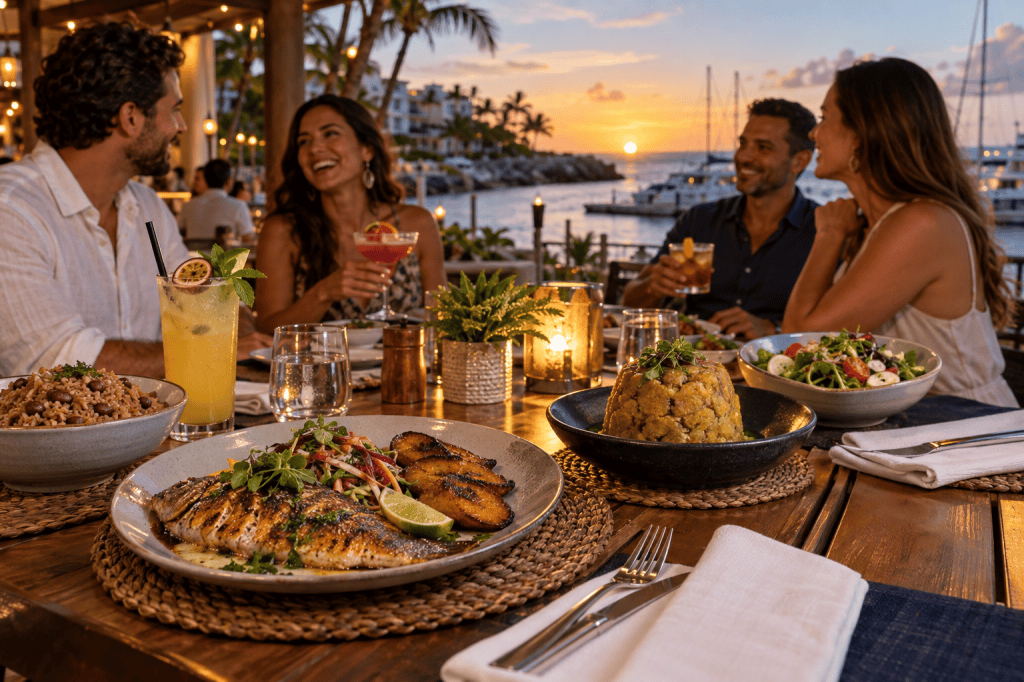
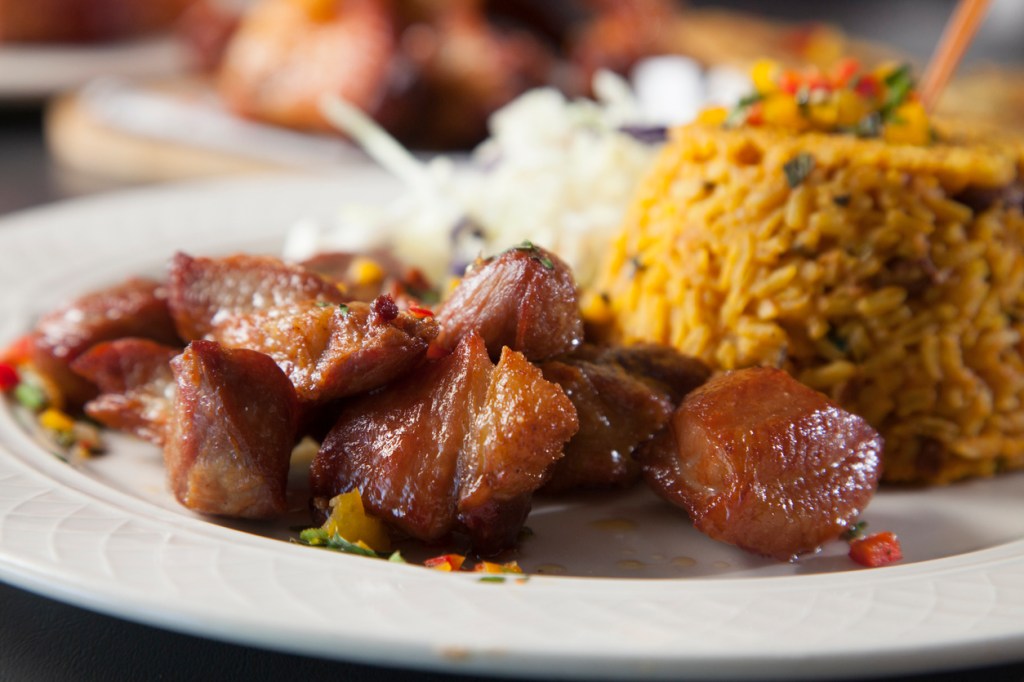
    These delicious pieces of fried pork are a major delicacy in Puerto Rico mostly served with rice mofongo or fried plantain

    Christmas in Puerto Rico is much more than a single holiday. The season begins shortly after Thanksgiving and continues through Nochebuena, Christmas Day, New Year’s Eve, Three Kings Day, the Octavitas, and the Fiestas de la Calle San Sebastián in January. It is often described as one of the longest Christmas celebrations in the world.

    At the center of Puerto Rico’s holiday traditions is food. Families gather around tables filled with slow-roasted pork, arroz con gandules, pasteles, morcilla, traditional side dishes, coconut desserts, and homemade coquito. Music fills the house, neighbors arrive for parrandas, and recipes passed from one generation to the next become part of the celebration.

    Puerto Rican Christmas food reflects the island’s layered culinary history, bringing together Indigenous ingredients, Spanish cooking traditions, African influences, Caribbean flavors, and generations of Puerto Rican creativity.

    Nochebuena: Puerto Rico’s Most Important Holiday Feast

    For many Puerto Rican families, the main Christmas celebration takes place on Nochebuena, or Christmas Eve. Relatives and friends gather for a generous meal, often followed by music, dancing, storytelling, and a late-night parranda.

    Although every family has its own traditions, a classic Puerto Rican Christmas dinner may include:

    • Lechón asado or pernil
    • Arroz con gandules
    • Pasteles
    • Morcilla
    • Guineítos en escabeche
    • Yuca al mojo
    • Ensalada de papa or ensalada de coditos
    • Tembleque
    • Arroz con dulce
    • Coquito

    The menu is important, but the experience is about much more than eating. Preparing the meal, setting the table, sharing recipes, and welcoming guests are all part of Navidad in Puerto Rico.

    Lechón Asado: The Centerpiece of the Celebration

    Lechón asado is one of Puerto Rico’s most iconic holiday foods. A whole pig is seasoned generously with adobo—typically prepared with garlic, oregano, black pepper, salt, vinegar, and other family-specific ingredients—and slowly roasted over charcoal or an open fire.

    The goal is tender, flavorful meat covered by crispy skin known as cuerito. Preparing an entire lechón takes time, patience, and skill, turning the process into a communal event.

    Pernil is a more practical alternative commonly prepared at home. Instead of roasting a whole pig, cooks season a pork shoulder with garlic and spices and roast it slowly in the oven until the meat becomes tender and the skin develops its characteristic crunch.

    Travelers can experience this tradition along La Ruta del Lechón in Guavate, where roadside lechoneras serve roasted pork with arroz con gandules, morcilla, yuca, tostones, and other traditional dishes. On weekends and during the Christmas season, many lechoneras also feature live music and dancing.

    Recipe Snapshot

    For homemade pernil, marinate a pork shoulder overnight with crushed garlic, oregano, black pepper, salt, olive oil, and vinegar or citrus juice. Roast it slowly until the meat is tender, then increase the heat near the end to crisp the skin.

    Arroz con Gandules: The Essential Holiday Side

    Arroz con gandules is one of the most recognizable dishes in Puerto Rican cuisine and the classic companion to lechón or pernil.

    The dish combines rice and pigeon peas with sofrito, sazón, annatto, olives, and seasonings. Some families add pieces of pork, ham, or bacon for additional flavor.

    Rather than belonging to a single cultural tradition, arroz con gandules reflects the broader history of Puerto Rican cooking. Rice, legumes, aromatics, herbs, and local preparation techniques came together over generations to create a dish that is now inseparable from Puerto Rican celebrations.

    It is traditionally cooked in a caldero, the heavy pot found in almost every Puerto Rican kitchen. The most coveted part is often the pegao—the crispy layer of rice that forms at the bottom.

    Recipe Snapshot

    Sauté sofrito with sazón, tomato sauce, olives, and seasonings. Add pigeon peas, rice, and broth, then cook in a covered caldero until the rice is tender and flavorful.

    Pasteles: A Holiday Tradition Made by Hand

    No discussion of traditional Puerto Rican Christmas food is complete without pasteles.

    Pasteles are savory bundles made from a seasoned masa that commonly combines green bananas, yautía, plantains, or yuca. The masa is spread onto a banana leaf, filled with seasoned pork, wrapped in parchment paper, tied with string, and boiled.

    Making pasteles is labor-intensive, which is why many families prepare them together in an assembly line. One person prepares the masa, another cooks the filling, and others wrap and tie each pastel. The process turns cooking into a family tradition.

    Recipes vary by town and household. Some cooks add chickpeas, olives, raisins, or peppers, while others insist that certain ingredients never belong inside a pastel. These debates are part of the tradition.

    Recipe Snapshot

    Prepare a masa using grated green bananas, yautía, plantain, or yuca. Season it with annatto-infused oil and broth, add a spoonful of stewed pork, and wrap it securely in a softened banana leaf and parchment paper before boiling.

    Morcilla: Savory, Spiced, and Traditionally Puerto Rican

    Puerto Rican morcilla is not a hot dog or an ordinary sausage. It is a rich blood sausage traditionally prepared with pork blood, cooked rice, sofrito, culantro, garlic, spices, and seasonings.

    Its roots connect to Spanish blood-sausage traditions, but the Puerto Rican version developed its own flavor through the use of rice, local herbs, and island seasonings.

    Morcilla is frequently served alongside lechón at holiday gatherings and lechoneras. It may be boiled, grilled, or finished until the casing develops a lightly crisp exterior.

    Its deep, savory flavor pairs especially well with arroz con gandules, yuca al mojo, and pickled green bananas.

    Mofongo: Puerto Rico’s Famous Plantain Dish

    Mofongo is not exclusively a Christmas dish, but it is one of the foods visitors most closely associate with Puerto Rico and often appears at restaurants and special gatherings during the holiday season.

    It is prepared by frying green plantains and mashing them in a pilón with garlic, olive oil or broth, and crispy pieces of chicharrón. The mixture is shaped into a mound and served as a side dish or filled with shrimp, chicken, pork, steak, or vegetables.

    Mofongo reflects Puerto Rico’s strong African culinary heritage and is commonly associated with West African preparations such as fufu. Puerto Rican cooks transformed those influences using plantains, garlic, pork, and local cooking methods to create a dish with its own distinct identity.

    Recipe Snapshot

    Fry sliced green plantains until tender and golden. Mash them with garlic, chicharrón, and a small amount of broth or olive oil. Shape the mixture in a pilón or small bowl and serve immediately.

    Classic Puerto Rican Christmas Side Dishes

    The supporting dishes are often just as anticipated as the main course.

    Guineítos en escabeche are green bananas marinated with olive oil, vinegar, onions, garlic, bay leaves, and peppercorns. Their bright acidity balances the richness of roasted pork and morcilla.

    Yuca al mojo combines tender cassava with olive oil, garlic, onions, and citrus or vinegar. Potato salad and macaroni salad are also common, with recipes varying considerably from family to family.

    Together, these dishes create the abundance and variety associated with a traditional Puerto Rican Nochebuena table.

    Tembleque: Puerto Rico’s Delicate Coconut Dessert

    Tembleque is a smooth coconut pudding traditionally served during the Christmas season. Its name comes from the Spanish verb temblar, meaning “to tremble,” because the dessert gently jiggles after it has set.

    Unlike many custards, traditional tembleque does not require eggs. It is generally made with coconut milk, sugar, cornstarch, and warm spices, then chilled and topped with cinnamon.

    The dessert’s coconut flavor and light texture make it a refreshing finish after a rich holiday meal.

    Recipe Snapshot

    Whisk coconut milk with sugar, cornstarch, and a small amount of salt. Cook slowly until thickened, pour into molds, and refrigerate until firm. Unmold and finish with ground cinnamon.

    Arroz con Dulce: Sweet Rice with Coconut and Spice

    Another beloved Puerto Rican Christmas dessert is arroz con dulce, a creamy rice pudding made with coconut milk, cinnamon, cloves, ginger, raisins, and other warm spices.

    The rice is soaked before cooking and slowly absorbs the spiced coconut mixture. It is then chilled and served with a dusting of cinnamon.

    Like many Puerto Rican holiday recipes, arroz con dulce varies from one household to another. Some families include raisins, while others prefer it without them. Some make it soft and creamy, while others allow it to set more firmly.

    Coquito: Puerto Rico’s Signature Christmas Drink

    Coquito is the unmistakable drink of Puerto Rican Christmas. Creamy, fragrant, and traditionally served cold in small glasses, it combines coconut with warm spices and, in many recipes, Puerto Rican rum.

    A typical coquito recipe may include coconut milk, cream of coconut, evaporated milk, condensed milk, vanilla, cinnamon, nutmeg, and rum. However, every family seems to have its own version.

    Some recipes are thicker, some contain more coconut, and others use different combinations of spices or rum. There are also alcohol-free versions for children and guests who do not drink.

    Coquito is more than a holiday cocktail. Bottles are often prepared as gifts and shared with relatives, friends, neighbors, and coworkers. The annual debate over who makes the best coquito is part of the fun.

    Recipe Snapshot

    Blend coconut milk, cream of coconut, condensed milk, evaporated milk, vanilla, cinnamon, and nutmeg until smooth. Add rum if desired, refrigerate thoroughly, and shake before serving.

    Parrandas, Music, and the Spirit of Christmas

    Puerto Rican Christmas traditions extend far beyond the dining table.

    During a parranda, a group of friends arrives unexpectedly at someone’s home playing traditional instruments such as the cuatro, güiro, maracas, guitar, and panderos. The hosts welcome the musicians with food and drinks before joining the group on its way to the next house.

    The celebration continues through Día de Reyes on January 6, the Octavitas, and the Fiestas de la Calle San Sebastián in Old San Juan. This extended calendar makes Navidad one of the most joyful and culturally rich times to visit Puerto Rico.

    Experiencing a Puerto Rican Christmas During Your Villa Stay

    Guests visiting Puerto Rico during the holidays can experience these traditions in several ways.

    Spend an afternoon exploring the lechoneras of Guavate, visit a local bakery or market, attend a Christmas festival, or reserve a private chef to prepare a traditional Nochebuena dinner at your villa.

    A private villa provides the perfect setting for a family celebration. Guests can gather around one table, prepare coquito in a full kitchen, enjoy music on the terrace, and create their own Puerto Rican holiday memories with privacy and comfort.

    Puerto Rican Christmas food is more than a collection of recipes. It represents family, hospitality, history, music, and the joy of sharing. From the crispy cuerito of lechón asado to the coconut and cinnamon in tembleque and coquito, every flavor tells part of Puerto Rico’s story.

    This holiday season, go beyond the decorations and discover the traditions that make Christmas in Puerto Rico unforgettable.

    Plan your Puerto Rico Christmas getaway with a luxury villa stay and experience the flavors, music, and warmth of Navidad like a local.

  • Bioluminescent Bays

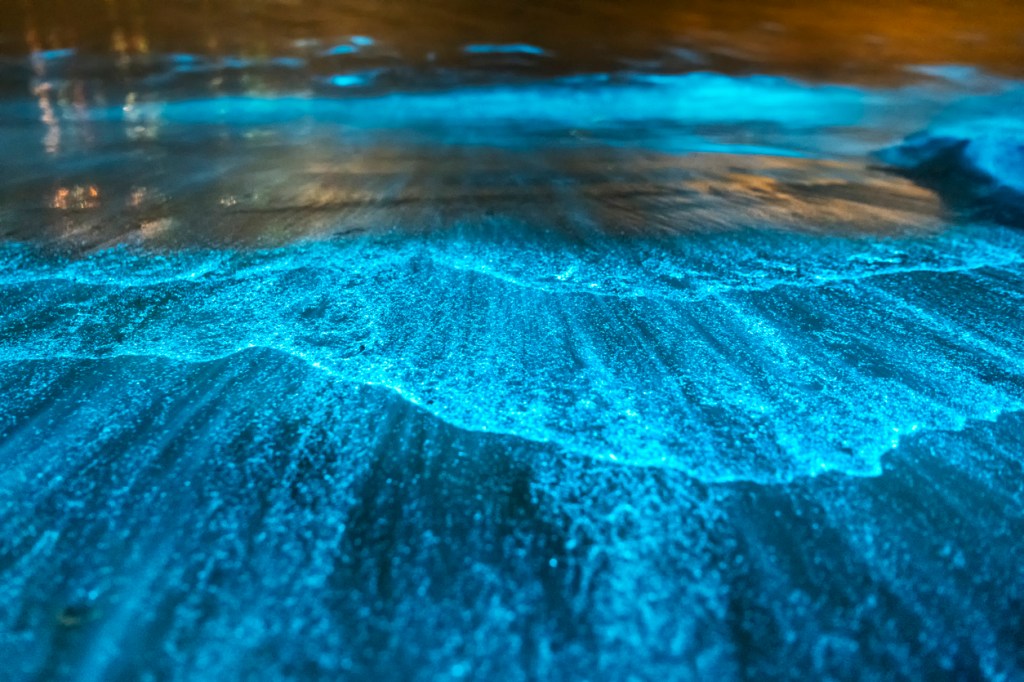
    Imagine paddling through calm Caribbean waters beneath a dark night sky. As your kayak moves forward, every stroke creates shimmering trails of blue-green light. This extraordinary phenomenon can be experienced in Puerto Rico’s bioluminescent bays—some of the island’s most fascinating natural attractions.

    Puerto Rico is home to three year-round bio bays: Mosquito Bay in Vieques, Laguna Grande in Fajardo, and La Parguera in Lajas. Each offers a different experience, from kayaking through mangrove channels to taking a guided nighttime boat tour.

    For travelers seeking an unforgettable combination of nature, adventure, and luxury, visiting a Puerto Rico bioluminescent bay deserves a place at the top of the itinerary.

    What Makes Puerto Rico’s Bioluminescent Bays Glow?

    The magical glow is created by microscopic organisms called dinoflagellates. When movement disturbs the water, these organisms produce a brief flash of blue-green light.

    A paddle, kayak, boat, or even the natural movement of the water can create thousands of tiny sparkling lights beneath the surface. The concentration of dinoflagellates, combined with Puerto Rico’s warm climate, mangrove ecosystems, shallow waters, and narrow bay entrances, allows this rare natural phenomenon to occur throughout the year.

    The intensity of the glow can vary depending on rainfall, tides, wind, water quality, and moonlight. No two visits are exactly the same, making each Puerto Rico bio bay tour a unique experience.

    Mosquito Bay, Vieques

    Mosquito Bay in Vieques is the most famous of Puerto Rico’s three bioluminescent bays. Recognized by Guinness World Records in 2006 as the brightest bioluminescent bay in the world, it is widely considered one of Puerto Rico’s most extraordinary natural wonders.

    The bay’s protected setting, surrounding mangroves, limited artificial light, and exceptionally high concentration of dinoflagellates create an intense glow on favorable nights.

    Most Mosquito Bay tours begin near Esperanza on the southern coast of Vieques. Guests are transported to the bay and then guided across the water in kayaks. Some companies offer clear-bottom kayaks, allowing visitors to observe the glowing water beneath them.

    Reaching Vieques requires additional planning. Visitors can travel by ferry from Ceiba or take a short flight from Puerto Rico’s main island. Because the bio bay tours operate after dark, spending at least one night in Vieques is generally the most comfortable option.

    Best for: Travelers seeking the brightest and most immersive bioluminescent experience.

    Luxury traveler’s touch: Fly privately or book scheduled air service to Vieques, arrange ground transportation in advance, and combine the bio bay tour with a curated dinner in Esperanza.

    Laguna Grande, Fajardo

    Laguna Grande in Fajardo is the most convenient bioluminescent experience for travelers staying in San Juan, Río Grande, Luquillo, Fajardo, or Palmas del Mar.

    Although commonly called a bio bay, Laguna Grande is technically a lagoon. The adventure begins with a guided kayak journey through a narrow mangrove channel. Once inside the lagoon, guides explain the science behind bioluminescence while guests watch the water illuminate with each movement.

    The mangrove passage makes this experience especially memorable, creating a sense of mystery before reaching the glowing lagoon.

    Laguna Grande is approximately an hour to an hour and fifteen minutes from San Juan, depending on traffic. Tours typically depart from Las Croabas in Fajardo and are offered at different times throughout the evening.

    Because kayaking conditions, age requirements, and physical demands vary, travelers should review the tour details before reserving. Some operators also provide transportation from the San Juan area.

    Best for: Travelers staying on Puerto Rico’s main island who want a convenient evening excursion.

    Luxury traveler’s touch: Arrange chauffeured transportation from your villa, reserve a small-group or private tour when available, and return afterward for cocktails on your terrace.

    La Parguera, Lajas

    Located in Lajas on Puerto Rico’s southwest coast, La Parguera provides a different way to experience bioluminescence.

    It is the only one of Puerto Rico’s three bio bays where motorboats are permitted at night. This makes La Parguera an attractive alternative for families, multigenerational groups, or travelers who prefer a guided boat excursion instead of kayaking.

    Tours depart from the waterfront village of La Parguera, an inviting coastal community known for its restaurants, food kiosks, colorful atmosphere, mangrove channels, and nearby cays.

    Visitors can spend the day exploring the waters around Cayo Caracoles, Cayo Enrique, or Mata La Gata before returning to the village for dinner and an evening bio bay tour.

    La Parguera is especially convenient for guests staying in Cabo Rojo, Lajas, Guánica, or other destinations along Puerto Rico’s southwest coast.

    Best for: Families, groups, and travelers who prefer a guided boat experience.

    Luxury traveler’s touch: Reserve a private captain and boat, explore La Parguera’s cays during the afternoon, enjoy sunset on the water, and continue into the evening for the bioluminescent experience.

    Which Puerto Rico Bio Bay Should You Visit?

    The best bioluminescent bay depends on your location and travel preferences.

    • Choose Mosquito Bay for the most celebrated and potentially brightest experience.
    • Choose Laguna Grande for convenient access from San Juan and Puerto Rico’s east coast.
    • Choose La Parguera for boat-tour options and easy access from Cabo Rojo and the southwest.

    Travelers with enough time may choose to experience more than one. Each location has a distinct setting, atmosphere, and style of exploration.

    The Best Time to See Bioluminescence in Puerto Rico

    Dark nights generally provide the best viewing conditions. A bright moon can make the glow appear less dramatic, so plan your tour as close to the new moon as possible.

    Before booking:

    • Review the lunar calendar.
    • Ask the tour operator about anticipated visibility.
    • Reserve early, especially during holidays and peak travel periods.
    • Choose a later departure when available, as conditions may be darker.
    • Remember that bioluminescence is a natural phenomenon and its intensity cannot be guaranteed.

    Phone cameras often struggle to capture the glow accurately. Rather than concentrating on photography, allow yourself to experience the movement, darkness, and sparkling water firsthand.

    How to Protect Puerto Rico’s Bio Bays

    Bioluminescent bays are delicate ecosystems. Responsible tourism helps protect the dinoflagellates, mangroves, wildlife, and water quality that make these places so extraordinary.

    Visitors should:

    • Book with an experienced and responsible tour operator.
    • Follow all instructions provided by guides.
    • Avoid unnecessary flashlights, camera flashes, and bright phone screens.
    • Apply insect repellent before arriving rather than near the water.
    • Choose creams or balms instead of aerosol sprays whenever possible.
    • Never leave trash, food, or personal items behind.
    • Avoid touching mangroves or disturbing wildlife.
    • Follow all conservation restrictions established for the bay.

    Protecting these environments ensures future generations can continue experiencing Puerto Rico’s glowing waters.

    Elevate the Experience with a Luxury Villa

    A private villa creates the perfect setting for a Puerto Rico bioluminescent bay adventure.

    Guests staying near Fajardo, Río Grande, Luquillo, Palmas del Mar, Cabo Rojo, or Puerto Rico’s southwest coast can enjoy spacious accommodations while remaining within reach of these remarkable natural attractions.

    Private transportation, personalized tour coordination, boat charters, chef-prepared meals, and thoughtfully planned itineraries remove the stress from the experience. After the tour, return to the privacy of your villa, enjoy a late dinner or cocktails on the terrace, and reflect on one of the most memorable evenings of your vacation.

    Puerto Rico’s bioluminescent bays are more than nighttime attractions. They are living natural wonders that reveal an entirely different side of the island—quiet, mysterious, and illuminated from within.

    👉 Explore our collection of luxury villas and let us help you plan an unforgettable Puerto Rico bio bay experience surrounded by comfort, privacy, and personalized service.

  • With nearly 300 miles of coastline, Puerto Rico offers an extraordinary variety of beaches. You can swim in calm Caribbean waters, snorkel above colorful reefs, watch surfers along the Atlantic coast, or escape by private boat to an uninhabited cay.

    The island’s best beaches are not all alike—and that is part of their appeal. Some provide convenient facilities and beachfront dining, while others reward adventurous travelers with untouched landscapes and remarkable privacy.

    Pair these destinations with a spacious luxury villa, personalized concierge assistance, and a thoughtfully planned itinerary, and a simple beach vacation becomes an unforgettable Puerto Rican experience.

    1. Flamenco Beach, Culebra

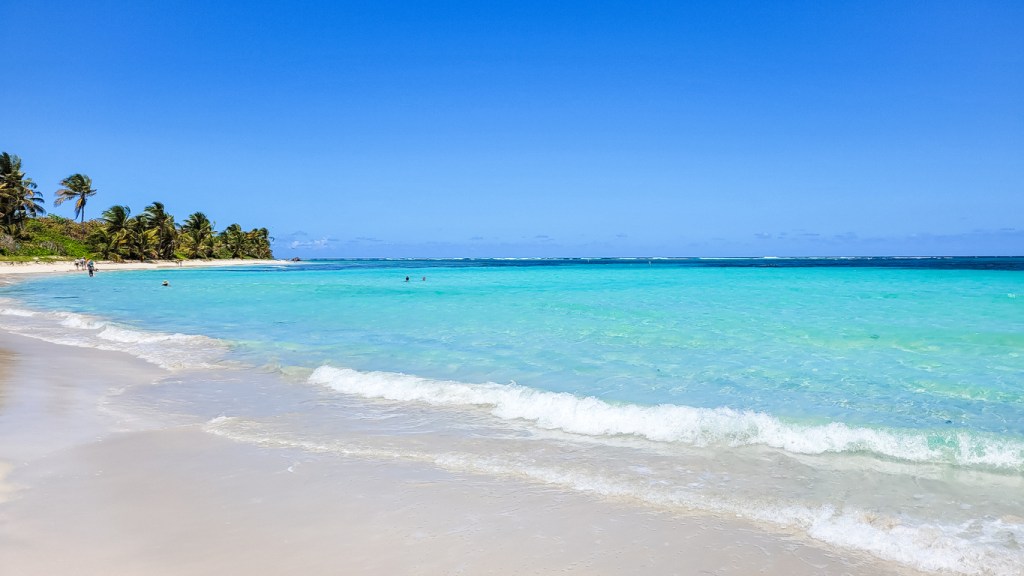
    Exotic carribean shore of Puerto Rico Flamenco beach

    Flamenco Beach is Puerto Rico’s most celebrated stretch of sand and one of the most recognizable beaches in the Caribbean. Its wide, crescent-shaped bay, powdery white sand, and brilliant turquoise water create the tropical scenery most travelers imagine when dreaming of Puerto Rico.

    The generally shallow water makes Flamenco appealing for swimming, while reefs near the edges of the bay provide snorkeling opportunities when conditions are favorable. Visitors will also recognize the historic military tank resting near the shoreline, now covered in colorful artwork.

    Culebra can be reached by ferry from Ceiba or by a short flight from the main island. Transportation should be arranged well in advance, particularly during weekends and holidays.

    Best for: First-time visitors, couples, families, and classic Caribbean scenery.

    Luxury touch: Arrange a private flight to Culebra, followed by reserved transportation and a curated beach picnic.

    2. Zoní Beach, Culebra

    Travelers seeking a quieter alternative to Flamenco should continue to Zoní Beach on Culebra’s northeastern coast.

    Zoní offers a long sweep of white sand, deep-blue water, distant island views, and considerably fewer visitors. Its natural setting feels secluded and untouched, making it ideal for a romantic walk, peaceful afternoon, or private picnic.

    Unlike Flamenco, Zoní has no restrooms, restaurants, rental facilities, or concessions. Visitors should bring water, food, shade, and everything else they will need—and carry everything out when they leave.

    Sea turtles may nest along this coastline, so marked nesting areas should always be given plenty of space.

    Best for: Couples, photographers, and travelers seeking solitude.

    Luxury touch: Combine Flamenco and Zoní in a privately planned Culebra day with ground transportation, refreshments, and snorkeling equipment arranged in advance.

    3. La Chiva Beach, Vieques

    Located within the Vieques National Wildlife Refuge, La Chiva is one of Puerto Rico’s most spectacular natural beaches.

    Formerly known as Blue Beach, La Chiva extends along a seemingly endless ribbon of white sand. Its water shifts from pale turquoise to deep blue, while different numbered entrances lead to swimming areas, snorkeling spots, and quieter sections of the shoreline.

    There are few commercial services, so visitors should arrive prepared with drinks, food, sun protection, and snorkeling equipment. Refuge access and individual beach openings can change for conservation or maintenance, making it important to confirm current conditions before visiting.

    Best for: Snorkeling, unspoiled scenery, and travelers willing to venture beyond the main island.

    Luxury touch: Stay overnight in Vieques and combine La Chiva with a sunset dinner and an evening bioluminescent-bay excursion.

    4. Cayo Icacos, Fajardo

    Although technically a small uninhabited cay rather than a traditional mainland beach, Cayo Icacos delivers one of the most luxurious beach experiences available from Puerto Rico’s east coast.

    Located off Fajardo within the Cordillera Keys Nature Reserve, Icacos is known for its white sand and exceptionally clear water. There are no hotels, restaurants, or permanent facilities—only the sea, sand, reefs, and surrounding views.

    Visitors arrive by water taxi, catamaran, or private boat. A private charter allows families and groups to choose their own schedule, avoid the busiest periods, and combine Icacos with snorkeling at nearby reefs.

    Best for: Private boating, snorkeling, celebrations, and small groups.

    Luxury touch: Reserve a crewed private charter with a catered lunch, premium beverages, towels, snorkeling equipment, and flexible departure times.

    5. La Playuela, Cabo Rojo

    Commonly called Playa Sucia, La Playuela is anything but dirty. Its proper name means “the little beach,” and its dramatic surroundings make it one of Puerto Rico’s most memorable coastal destinations.

    The beach sits beneath the limestone cliffs of Los Morrillos, near the historic Cabo Rojo Lighthouse and the colorful salt flats. The contrast between turquoise water, white cliffs, reddish salt flats, and open sky creates extraordinary scenery for photography.

    Reaching the beach normally involves driving over an unpaved road and completing a walk or short hike. There are no lifeguards, concessions, or public facilities at the beach, so visitors should bring water and sun protection and avoid carrying more than they need.

    Best for: Scenic adventures, couples, photography, and memorable sunsets.

    Luxury touch: Pair La Playuela with a private guided visit to the salt flats, sunset cocktails, and a chef-prepared dinner at your Cabo Rojo villa.

    6. Playa Buyé, Cabo Rojo

    While La Playuela is dramatic and rugged, Playa Buyé offers an easier and more relaxed beach day.

    Located on Puerto Rico’s southwest coast, Buyé is loved for its typically calm, clear Caribbean water and intimate local atmosphere. Trees provide some natural shade, and nearby food and beverage options make it possible to spend several comfortable hours by the water.

    Buyé is particularly attractive for families and travelers who prefer gentle swimming conditions over waves and water sports. It can become busy on weekends, so arriving early or visiting on a weekday creates a more peaceful experience.

    Best for: Swimming, families, relaxed afternoons, and travelers staying in Cabo Rojo.

    Luxury touch: Pack a personalized villa picnic and arrive early enough to select a quiet position near the water.

    7. Mar Chiquita, Manatí

    Mar Chiquita Beach Puerto Rico

    Mar Chiquita is one of the most visually distinctive beaches on Puerto Rico’s north coast.

    Two limestone formations surround a half-moon-shaped cove, leaving a narrow opening through which Atlantic water enters. The result is a dramatic natural pool framed by golden sand and rugged rock.

    The beach is beautiful for sunbathing and photography, but swimming conditions depend heavily on the ocean. Water entering through the opening can create strong currents, particularly when the Atlantic is rough. Visitors should admire the beach from shore whenever conditions are uncertain.

    There is limited shade, so umbrellas, water, and sun protection are essential.

    Best for: Photography, sightseeing, coastal exploration, and experienced swimmers during calm conditions.

    Luxury touch: Visit with a local guide who can combine Mar Chiquita with other scenic locations and restaurants along Puerto Rico’s northern coast.

    8. Peña Blanca, Aguadilla

    Known locally as Wishing Well, Peña Blanca is a small Aguadilla beach treasured for its clear water, pale sand, limestone surroundings, and snorkeling opportunities.

    It feels far more secluded than nearby Crash Boat, but this intimacy comes with limited parking and few facilities. The amount of visible sand can also change with the season and ocean conditions.

    Peña Blanca is most enjoyable when the sea is calm. Visitors should avoid entering the water when waves or currents are strong and be considerate of the surrounding residential community.

    Best for: Snorkeling, couples, photography, and discovering a quieter side of Aguadilla.

    Luxury touch: Include Peña Blanca in a private west-coast itinerary with a local driver, snorkeling guide, and sunset dinner reservation.

    9. Crash Boat Beach, Aguadilla

    Crash Boat combines striking water with a lively, energetic atmosphere. Its colorful pier, food kiosks, music, and brilliant sunsets make it one of the west coast’s most popular gathering places.

    When conditions are calm, the area around the pier attracts swimmers, snorkelers, and beginner divers. At other times of the year, stronger waves can change the character of the beach considerably.

    Crash Boat is not the place for complete seclusion, but it is an excellent choice for travelers who enjoy local energy, casual food, water activities, and people-watching.

    Best for: Groups of friends, older children, diving, snorkeling, and social beach days.

    Luxury touch: Enjoy a private morning snorkeling or diving excursion before returning later for sunset.

    10. Steps Beach and the Tres Palmas Marine Reserve, Rincón

    Steps Beach lies within the Tres Palmas Marine Reserve, one of Puerto Rico’s most valuable protected marine environments.

    During calmer conditions, the reserve is known for snorkeling and its elkhorn coral formations. In periods of heavy Atlantic surf, the same coastline becomes powerful and is better admired from shore.

    The beach has a natural, undeveloped character, and underwater conditions can change quickly. Snorkelers should use a knowledgeable local guide, avoid touching coral, and never enter the water when surf conditions are unsafe.

    Best for: Guided snorkeling, marine-life enthusiasts, nature lovers, and west-coast sunsets.

    Luxury touch: Book a private snorkeling guide who can select the safest location based on that day’s visibility and ocean conditions.

    11. Luquillo Beach, Luquillo

    Luquillo beach, Puerto Rico (playa la pared beach)

    Officially known as Balneario La Monserrate, Luquillo Beach is one of Puerto Rico’s most convenient and family-friendly coastal destinations.

    Its broad shoreline, palm trees, picnic areas, restrooms, and generally calmer water make it ideal for families and multigenerational groups. The nearby Luquillo kiosks offer everything from traditional frituras and seafood to sit-down restaurants and tropical cocktails.

    Its location also makes Luquillo easy to combine with El Yunque National Forest or other attractions along the northeast coast.

    Best for: Families, swimming, large groups, and combining the beach with local cuisine.

    Luxury touch: Spend the morning exploring El Yunque with a private guide, followed by a relaxed afternoon at Luquillo and dinner prepared at your Río Grande or Fajardo villa.

    12. El Escambrón Beach, San Juan

    Travelers do not have to leave San Juan to find clear water and excellent coastal scenery.

    Protected by offshore rock formations, El Escambrón often provides better swimming and snorkeling conditions than more exposed sections of the city’s Atlantic coastline. It also offers views connecting historic Old San Juan with the modern metropolitan area.

    The surrounding park, restrooms, picnic spaces, and convenient location make Escambrón one of the most practical beaches for visitors staying in San Juan.

    Best for: Urban travelers, snorkeling, families, and guests with limited time.

    Luxury touch: Combine a private Old San Juan tour with an afternoon at Escambrón, followed by cocktails and dinner in Condado or the historic district.

    What About Condado Beach?

    Condado beach in San Juan, Puerto Rico

    Condado remains one of Puerto Rico’s most desirable oceanfront neighborhoods, offering luxury shopping, fine dining, nightlife, spas, and easy access to San Juan’s attractions.

    However, the open-ocean sections of Condado Beach can experience powerful waves and dangerous currents. It is an excellent setting for walking, sunbathing, and enjoying the city’s beachfront atmosphere, but travelers should swim only in designated areas when conditions are safe.

    For a calmer nearby water experience, consider paddleboarding or kayaking in Condado Lagoon with a reputable operator.

    Best for: Beachfront city living, restaurants, nightlife, shopping, and sophisticated urban energy.

    Planning the Perfect Beach Day

    Puerto Rico’s beaches are public natural treasures, and their conditions can change from one day to the next. Before setting out:

    • Check the weather, surf forecast, and rip-current risk.
    • Observe posted warning flags and lifeguard instructions.
    • Never assume that calm-looking water is free from currents.
    • Bring reef-conscious sun protection, drinking water, and shade.
    • Avoid touching coral or disturbing marine animals.
    • Carry out everything you bring, particularly at remote beaches.
    • Reserve ferries, flights, guides, and private charters well in advance.
    • Remember that remote beaches may have no restrooms, food, cellular service, or lifeguards.

    Experience Puerto Rico’s Coast from a Luxury Villa

    The right accommodation transforms the way you experience Puerto Rico’s beaches.

    A private villa provides the space to prepare for the day at your own pace, store snorkeling and beach equipment, enjoy breakfast before an early departure, and return to a private pool or terrace after exploring.

    Whether you prefer the Caribbean waters of Cabo Rojo, the natural cays near Fajardo, the surf culture of the west coast, or the sophisticated energy of San Juan, Puerto Rico offers a beach experience for every type of traveler.

    👉 Explore our collection of luxury villas and let us help you plan a Puerto Rico beach getaway filled with privacy, comfort, and unforgettable coastal experiences.